Owning a home is one of the most rewarding milestones in life, but it comes with a major, ongoing responsibility: property maintenance. Beyond standard weekend chores like mowing the lawn or swapping out air filters, every house eventually requires specialized technical expertise, heavy equipment, and commercial-grade material sourcing.
While the rise of online video tutorials has inspired many property owners to pick up tool belts, DIY solutions have clear operational limits. Attempting complex structural modifications, high-voltage electrical routing, or heavy-duty site excavation without proper licensing often leads to code violations, voided manufacturer warranties, and inflated repair bills.
The most efficient, cost-effective way to preserve property value and protect structural integrity is to establish a reliable network of trade professionals before an emergency occurs. Having a trusted roster of vendors ready allows you to transition from reactive panic repairs to strategic, value-adding home maintenance.
Managing Large-Scale Renovations and Structural Builds

When embarking on major home additions, undertaking extensive property remodels, or engaging in comprehensive structural timber work, it is imperative to adhere stringently to all relevant regulatory requirements. These projects necessitate meticulous planning and a methodical approach to executing the work. The process involves precise project sequencing, which is crucial to ensuring each phase is completed in a timely and logical order. In addition, it requires the proficient management of experienced labor forces to oversee a variety of tasks. Particularly when projects involve modifications to load-bearing walls or encompass multiple trades such as plumbing, electrical, and carpentry, managing these trades independently can lead to significant complications. Often, such attempts result in costly delays and scheduling issues, which could have been avoided through proper oversight.
Engaging with a seasoned general contractor is invaluable in ensuring that your project progresses seamlessly from the initial stages of architectural drawing and design all the way through to the final municipal inspection. Such professionals bring comprehensive expertise in securing the essential local permits necessary for legal compliance. Moreover, they meticulously verify that all subcontractors engaged in the project possess valid and up-to-date liability insurance as well as workers’ compensation insurance. Maintaining a strict critical path schedule, the general contractor serves as the primary point of contact throughout the project. They are dedicated to safeguarding your budget against the threats of scope creep—unintended expansions or modifications—and make certain that all structural alterations meet or exceed national building codes.
When selecting a primary project management professional, consider the following critical points:
- Request a minimum of three recent client references. In addition, obtain proof of the professional’s active state licensure and evidence of their general liability insurance coverage. This ensures not only their competence but also your protection throughout the project.
- Inquire thoroughly about their typical network of subcontractors. It is essential to verify that all key tradespeople, including electricians, plumbers, and framers, possess full credentialing. This step ensures that all work performed meets high standards of safety and quality.
- Establish a transparent contract that outlines clear payment milestones. These milestones should be directly tied to passing municipal inspections rather than arbitrary calendar dates. This approach ensures work quality and regulatory compliance are prioritized.
In instances where projects involve specialized wood construction such as timber framing or traditional cabin architecture, standard residential carpentry techniques often prove inadequate. Collaborating with a skilled log home builder is crucial. These professionals bring unparalleled insights regarding the selection of appropriate wood species, comprehending and managing the wood’s moisture content, addressing the dynamic settling of logs over time, as well as executing advanced joinery techniques. Natural timber exhibits significant expansion and contraction in response to the environment’s relative humidity. Thus, it necessitates unique solutions such as settling jacks, flexible chinking compounds, and custom flashing designs. These are specialized requirements that standard framing crews are typically ill-prepared to manage.
Fortifying Your Home’s Outer Shell
The exterior facade of your property plays a crucial role in safeguarding your home against a number of environmental elements. It acts as the first line of defense against the ravages of nature, including high winds that can forcefully batter your home’s surface, as well as water intrusion, which becomes a silent enemy when it seeps into the deeper wall cavities. Over time, the relentless onslaught of these elements can lead to ultraviolet degradation, weakening the facade and causing thermal loss. If the integrity of the exterior envelope is compromised, moisture can work its way into hidden areas, promoting the development of structural issues like framing rot and resulting in expensive and potentially hazardous interior mold problems.
Considering an upgrade to high-performance home siding is not only a wise investment for improving thermal performance but also an excellent opportunity to enhance your home’s curb appeal instantly. Today’s market offers a variety of modern exterior cladding options that cater to different needs. These range from insulated vinyl and composite panels to the more robust and long-lasting fiber cement. Each material comes with its own set of features: insulated vinyl, for example, incorporates an additional layer of insulation that disrupts thermal bridges typically created by wall studs, effectively increasing the thermal resistance ($R$-values).
To further enhance the efficiency of your home’s protective shell, it is beneficial to partner with a dedicated window supplier to address outdated and inefficient glass units. Today’s high-performance windows feature advanced technology designed to contribute to energy savings and comfort. These windows usually come with multi-pane insulated glass units (IGUs), which are filled with inert gases such as argon or krypton to reduce heat transfer. Additionally, they incorporate warm-edge spacers that help minimize heat loss around the perimeter of the glass and employ special Low-E (low-emissivity) coatings.
When evaluating glass and cladding systems for your home, there are several key considerations to keep in mind:
- Solar Heat Gain Coefficient (SHGC): This metric is vital, especially in regions with a lot of sunlight. It measures how effectively a window blocks heat from direct sunlight. In warmer climates, lower SHGC numbers are preferred to prevent excessive solar heat gain.
- U-Factor: This value indicates the rate at which a window allows heat to escape. The lower the U-factor, the better the window retains the heat inside, which is particularly important during cold winter months to maintain a comfortable indoor temperature without excessive reliance on heating systems.
- Integrated Weather-Resistive Barriers (WRB): It is essential to ensure that components such as house wraps, self-adhered flashing tapes, and rain-screen gaps are properly installed underneath the exterior cladding.
Enhancing Access, Security, and Exterior Protection
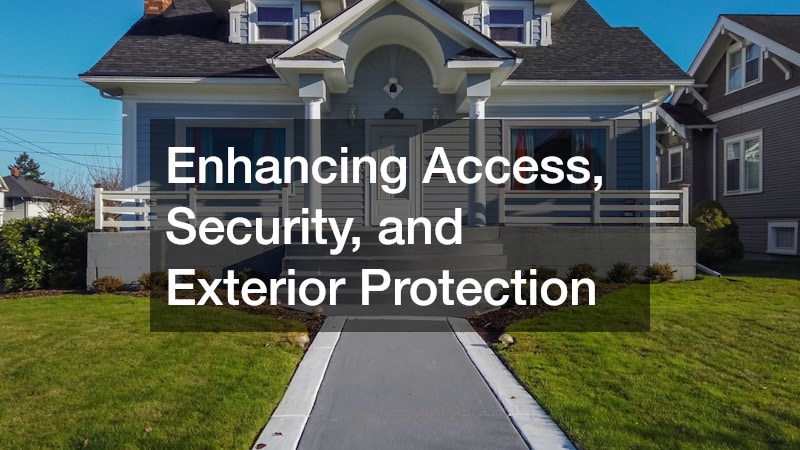
Exterior access points handle high daily traffic and remain exposed to severe weather year-round. These mechanical and structural features require precise alignment and heavy hardware to operate smoothly and securely.
Your overhead garage door represents both a major security access point and the largest moving mechanical system in your home. Partnering with an established garage door company ensures that high-tension torsion springs, heavy-duty track systems, lifting cables, and automatic openers are properly sized and calibrated. Attempting to repair or adjust high-tension spring assemblies without specialized winding rods and safety training poses extreme physical danger. Professional technicians also verify system safety sensors and install insulated door panels that help regulate temperature in attached garages.
For exterior windows, installing functional shutters provides essential physical protection against flying storm debris, extreme wind pressure, and harsh solar exposure. Beyond their obvious architectural charm, high-spec exterior panels crafted from aluminum, composite, or dense hardwoods serve as a critical line of defense during severe weather events.
Proactive maintenance practices for high-use exterior access systems include:
- Performing biannual visual inspections of overhead door cables, rollers, and weather-stripping seals to catch wear early.
- Testing auto-reverse safety mechanisms monthly by placing a solid wood block under the lowering garage door path.
- Lubricating hinges, track rollers, and mounting hardware with silicone or lithium-based lubricants—never heavy grease that attracts dirt and grit.
- Checking storm panel fasteners and mounting anchors annually to prevent rust and ensure quick mounting before storms hit.
Hardscaping and Driveway Infrastructure
Driveways and ground-level hardscapes support significant vehicle weight, endure constant freeze-thaw cycles, and channel massive amounts of rainwater runoff away from your foundation. Improper site preparation or subpar materials lead to early cracking, surface erosion, and structural collapse.
When managing large residential driveways, private access roads, or multi-car parking areas, hiring a contractor experienced in commercial asphalt paving yields far better results than relying on light-duty residential crews. High-grade pavement installation demands heavy mechanical compaction, precise mix formulations, and exact temperature management during application. Commercial-grade crews utilize heavy tandem rollers and automated paving machines to establish a uniform layer density that easily handles heavy delivery trucks and seasonal ground movement.
Long-term pavement preservation requires adherence to structural engineering best practices:
- Sub-Base Preparation: Excavating soft organic soil and installing a dense, well-compacted aggregate base course at a minimum depth of six to eight inches to support heavy wheel loads.
- Surface Drainage Slopes: Maintaining a minimum two percent cross-slope pitch across the paved surface to prevent standing water accumulation and subgrade saturation.
- Routine Sealcoating: Applying a protective coal-tar or asphalt-emulsion sealcoat every two to three years to shield the asphalt binder from destructive petroleum spills, UV rays, and water penetration.
- Crack Routing and Infill: Sealing open surface cracks exceeding one-quarter inch wide with hot-applied rubberized joint sealant before moisture infiltrates the aggregate base layer.
Essential Utilities and Internal Mechanical Systems
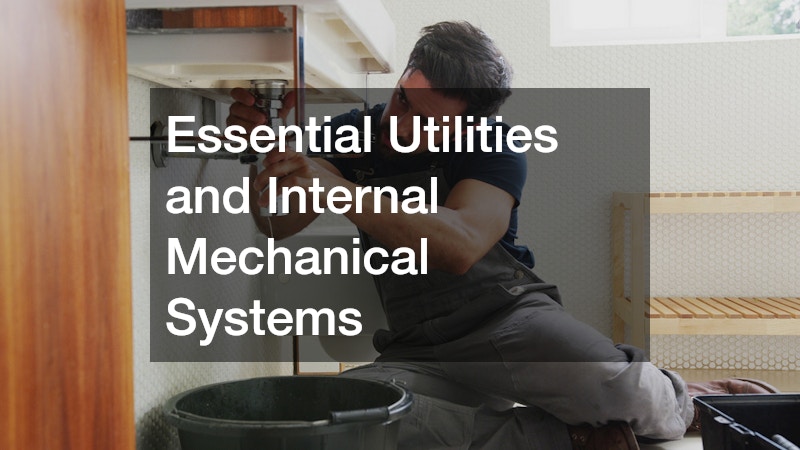
The mechanical infrastructure running through your walls and floor cavities provides essential heat, clean water, and safe waste removal. Keeping these core utility systems running reliably requires high-quality materials and professional installation standards.
For rural properties or homes situated off the primary municipal gas grid, maintaining a high-capacity propane tank is vital for uninterrupted space heating, hot water production, cooking, and emergency standby power generation. Whether utilizing a high-capacity above-ground cylinder or an aesthetically hidden underground unit, proper site selection requires strict adherence to safety distance clearances set by local fire codes and national safety standards. Qualified gas technicians perform essential pressure drop checks, leak testing, and regular multi-stage regulator replacements to ensure safe fuel delivery.
Indoors, addressing plumbing maintenance requires sourcing commercial-grade plumbing parts to replace worn internal components before minor drips escalate into catastrophic water damage. Inexpensive, low-grade plastic fittings often fail prematurely under standard residential water pressures. Installing brass ball valves, corrosion-resistant PEX-a piping systems, heavy-duty stainless steel braided supply lines, and original equipment manufacturer (OEM) fixture cartridges guarantees long-term pressure control and system reliability.
Critical steps for utility and plumbing risk management:
- Ensure every household member knows the exact location of the main water shut-off valve and how to operate it during a pipe break.
- Schedule professional fuel storage safety checks annually to test emergency shut-off valves and monitor fuel gauge accuracy.
- Replace rubber washing machine fill hoses with braided stainless steel lines every five years to prevent high-volume supply bursts.
- Install water pressure regulators to keep incoming municipal supply pressure between 45 and 60 PSI, protecting sensitive internal appliance valves from high pressure spikes.
Professional Finishing Touches and Interior Protection
The final phase of any major renovation or maintenance cycle involves protecting interior surfaces with high-performance coatings. While painting appears simple on the surface, achieving durable, flawless results requires rigorous substrate preparation and professional equipment.
Hiring a licensed painting contractor guarantees that wall surfaces are correctly repaired, sanded smooth, cleaned, and primed with high-adhesion undercoats prior to topcoat application. Professional crews understand how paint chemistry reacts with various materials, selecting specific moisture-resistant formulas for humid bathrooms, scrubbable low-sheen acrylics for busy hallways, and durable urethane-enamel finishes for cabinetry and trim work. Proper airless spraying, back-rolling, and edge-cutting techniques yield clean line work and seamless color coverage that DIY brush application rarely matches.
Professional surface preparation standards include:
- Testing painted surfaces in older homes for lead paint prior to aggressive sanding or surface scraping.
- Applying stain-blocking alkyd or shellac-based primers over water spots, knotty wood, or smoke damage before painting topcoats.
- Utilizing high-dust extraction sanders to maintain indoor air quality and ensure smooth finish adhesion across broad wall expanses.
- Selecting low-VOC (volatile organic compound) or zero-VOC paint formulations to protect indoor air quality during indoor application.
Building Your Permanent Vendor Roster

A successful homeownership strategy centers on proactive asset management rather than reactive crisis control. Waiting until a pipe bursts, a roof leaks during a storm, or a driveway collapses under winter freeze-thaw cycles forces you to make hurried decisions with available contractors who may not be fully vetted.